
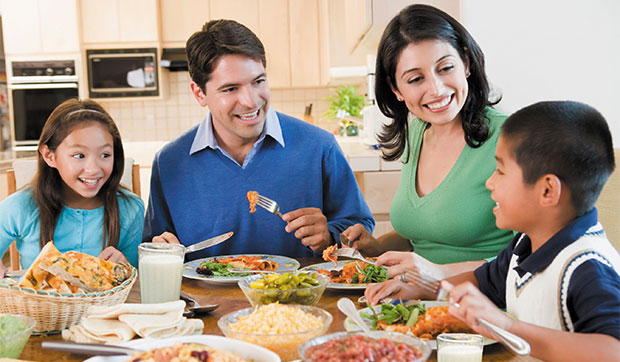
Family meals
Children who have regular family meals may have healthier eating habits than those who do not.
Not just a time to eat, dinner time is an opportunity to catch up on what your children learned in school during the day. Dinner is often the only time in a busy family day to enjoy and share. Know the importance of family meals. Eating patterns in children are formed by the time they turn 12, and as they get older, these patterns become more and more difficult to change. A Harvard University study shows that children who eat regularly with their parents may have healthier eating habits than those who don’t. Steps to improve your children’s nutrition Let your children help you prepare food. Your little helpers can tear lettuce or stir stews. Older children can chop ingredients under adult supervision. It may be a little uncomfortable or take longer, but the feeling of success and closeness that the children feel will make it worth it. Make your meals seasonal. “My mother always started dinner with fruit. Grapefruit during the fall and winter, cantaloupe in the spring, and honeydew melon in the summer.” Ellen Haas explains. “When I was a child, I knew that autumn had arrived, when the grapefruit appeared on the table again.” Seasonal fruits and vegetables are cheaper and better tasting. Use fruits and vegetables as snacks. Keep a bowl of washed fruit on the table for everyone in the family to “nibble” in those hungry moments just before dinner is ready. Let your children accompany you to the market to buy food. They are fantastic places for children to see and Learn about the different foods they eat. Encourage everyone in the family to choose their favorite fruits and vegetables.