Did you know that small dishes help you lose weight?
The size of the plates greatly influences the quantities eaten at each meal. Being aware of this can help us lose weight.
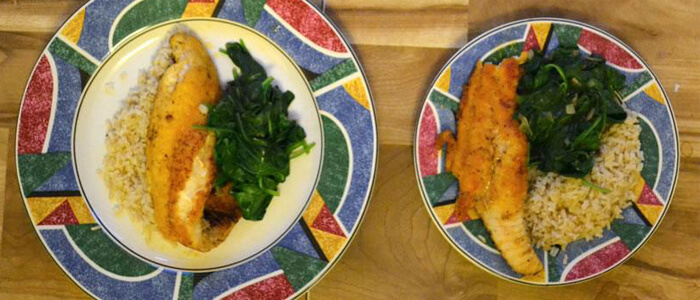
The size of the dishes - and the portions - greatly influences the quantities eaten at each meal. Being aware of this, and acting accordingly, can help us lose weight with less difficulty. Various studies from several North American universities (Illinois, Yale, Pennsylvania State) confirm what we all already intuited: we eat more the larger the portions, because there is a tendency to finish what we have on our plate even if we are already full. On the other hand, if we have finished with a small portion, it is difficult for us to ask for a second meal even if we are not completely satisfied. This reasoning, which we may sometimes despise because it seems trivial, can help us a lot to maintain or lose weight, especially if we apply it to the most energetic foods. Because, although it may be trivial, it is certainly important: scientists from the University of Illinois confirm that you eat up to 45% more when you serve larger portions. The simple fact of using smaller plates can help us, since we will tend to put smaller portions, in the same way that large plates make us tend to fill them, so the portions will be larger and we will eat more. Various nutritionists and experts insist a lot on the importance of the size of the dishes. When eating out the problem seems to get out of hand more, since we are not the ones who fill the plates or decide the size of the portions. In fact, their size has increased in recent decades. “Eat more for less money” has been imposed, and giant glasses of soft drinks, XXL hamburgers and similar products are imposed everywhere. However, even eating out we can do a lot for our health. Firstly, asking for smaller portions (a montage instead of a sandwich, a portion for two instead of one each), and also choosing lighter, natural and healthier menus, since it has been proven that these are more satiating and less fattening than highly processed ones. Finally, we must be aware of certain social and emotional motivations that can also be very harmful. For example, to look good at a party, the portions must be huge. On the other hand, if I want to honor my host, I must eat a lot and, of course, finish everything. Birthdays, weddings, parties, celebrations should always include a very caloric menu (lamb is better than a salad) and in excessive quantities. This culture of celebrations, in addition to the damage it does in itself due to the excess calories it entails, creates an unconscious association between happiness and gastronomic excess, which is also very harmful. Thus, in certain situations of emotional vulnerability, we can compensate for certain frustrations or negative moods by “raiding” the refrigerator. We must rationalize everything said in the previous paragraphs and, above all, act accordingly, for the good of our health and that of those around us.