Your child's whims could be eating disorders
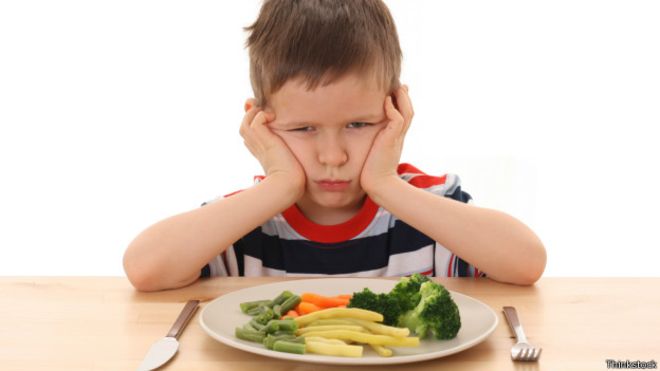
Impulsive eating may not be a vice but rather bulimia. It is known that being very selective when eating could lead to eating disorders.
In many cases, stopping eating is not a whim, it may be an eating disease: anorexia. In the same way, impulsive eating may not be a vice but rather bulimia. It is now known that being very selective when eating could also be an eating disorder and not a craving. ** Young children, unable to express themselves with words, use other forms of communication such as crying, spitting food or screaming. These behaviors are stressful for caregivers who, to avoid these behaviors, choose to prepare and give only those less problematic foods. -Toni Grau, psychotherapist at the Barcelona Institute of Eating Disorders ** We are talking about selective eating disorder or Arfid, Avoidant Restrictive Food Intake Disorder. This pathology that begins in childhood restricts or avoids the intake of certain foods. It is a disorder that has been recognized very recently because until now it has been considered a behavior that can be confused with bad education or with spoiled and capricious children who only want to eat certain foods. This pathology was admitted in the latest revision of the Diagnostic and Statistical Manual of Mental Disorders.
Negative effects
Selective eating disorder mainly affects children, although it can extend into adolescence. This could be the case of 17-year-old British teenager Jennifer Radigan, who only eats chips and cheese and is horrified at the idea of eating vegetables and meat. Doctors suspect she might suffer from selective eating disorder. The ideal is to introduce foods little by little and with a lot of patience. Because the diet of people who suffer from this syndrome, its main consequence is nutritional deficiency. Especially since the main foods avoided are those rich in vitamins, minerals and fiber. Like fruits, legumes and fish. “If the lack of these nutrients can have negative effects on adults, it can have much more negative effects on children.” According to Jesús Román, president of the Spanish Society of Dietetics and Food Sciences (Sedca). “Growth is a function of the caloric and nutritional value of the diet. So is neuronal and intellectual growth. A child who is very selective when it comes to eating has a very poor academic performance. He will almost certainly fail at school,” the expert tells BBC Mundo. Furthermore, “by having this selection and lacking many nutrients, the child will have many fewer defenses and will suffer from anemia,” he adds.
Psychiatric problem
Although one of the main consequences of this disorder is nutritional deficiency, Román points out that this syndrome, like anorexia and bulimia, is psychiatric. “It is a psychiatric disorder that is not treated nutritionally. The treatment is basically psychiatric,” explains the nutritionist. “Nutritional help is essential, especially in cases where the patient needs physical recovery. But the treatment is psychological and psychiatric, as with anorexia and bulimia.” Selective eating disorder is often confused with bad education. “The nutritionist collaborates, helps and makes the patient aware. But the treatment is psychiatric because the disorder is psychiatric,” Román insisted. According to experts on the subject, although there is no clear cause that causes this disorder to flourish, there could be a relationship with problems in the bond between the child and his caregiver. “Young children, not being able to express themselves with words, use other forms of communication such as crying, spitting out food or screaming. These behaviors are stressful for caregivers who, to avoid these behaviors, choose to prepare and give only those less problematic foods,” explains Toni Grau, psychotherapist at the Institute of Eating Disorders of Barcelona. “With this attitude, the initiative to introduce new foods is lost. The circle of the child not wanting to eat anything other than what they know is perpetuated,” he says.
Prevention
** A child who is very selective when eating has a very poor academic performance. He will almost certainly fail at schoolJesús Román, nutritionist ** A simple “I don’t want it” or “I don’t like this”, uttered by a child in front of a plate of food that he doesn’t like, has to be carried out calmly and intelligently. Children are great imitators of their parents. So if the little ones see that their parents are selective and do not eat this or that food, they will surely tend to reject it too. Hence, specialists point out, the importance of insisting from the beginning on including foods of all kinds in the diet. As long as they are appropriate for the child’s physiological characteristics. This way they will avoid nutritional and behavioral problems in the future. “Eating is a learned process. Therefore, to achieve correct nutrition for the little ones, you will have to be patient and introduce food little by little into a social and family environment.” Roman indicates. “It is in this way that the child gradually accepts the different textures and flavors of different foods.”