Why do we talk about good fat and bad fat?
The main goal should not be to have good fat, but to choose the right fats and achieve the right balance.
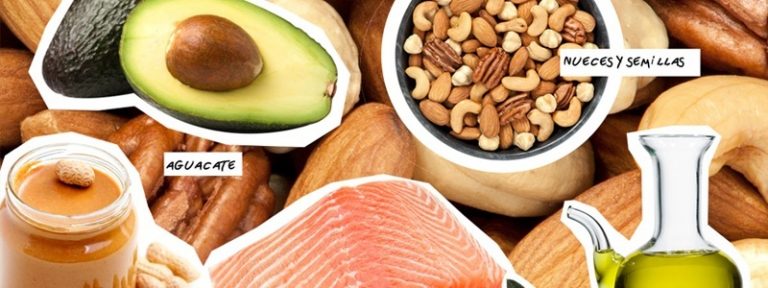
You may have heard, among many things, that there is fat that is not so bad or that perhaps there is a good type of fat. But I think it’s time to simplify and clarify this matter. I think that for this it is essential to define what fat is. Fatness: f. Adipose tissue that exists between organs. Abundance of meats and fats. Obesity. Now that we have the concept of fat a little clearer, I hope it is easier to understand what I am about to tell you. Fats in food, like proteins and carbohydrates, belong to macronutrients, provide us with energy and satisfy our appetite. In the blood and in the metabolism it is the source substance for many hormones, it is rich in many vitamins and provides energy. As a tissue, it participates in the formation of body structures such as cell membranes and nerves, protects joints and organs, and maintains body temperature. But what you have to understand is that there are different types of fat or fat. Which, in fact, is good and which is not. Why is it important to know how to differentiate them? Well, fats are also one of the main sources of energy and some help keep your heart healthy. Therefore, we have to be aware of the amount and types of fat we eat. Types of fat There is a type of fat that is not vital, but even harmful to our health, they are called trans fatty acids or (partly) hydrogenated fats. The spatial structure of an unsaturated fat is modified with heat (that is, when it is fried) until it obtains greater stability and the product becomes, therefore, more durable. And although they are delicious, The body cannot metabolize, or does not correctly, this artificially modified structure. Trans fatty acids are directly related to the appearance of inflammation in the body. I mean we look chubbier. As well as with an increase and deposits of LDL cholesterol in the blood, thus becoming a danger to the heart and blood vessels. In addition, they are suspected of promoting diseases such as high blood pressure or diabetes. Then we understand that bad fats could be divided into two Trans fatty acids: They are found in processed foods that contain partially hydrogenated fats. It is found naturally in everyday products such as meat. Saturated fatty acids: Solid at room temperature. In full-fat dairy products, fatty and processed meats. Saturated fats, such as those found, for example, in butter or fatty meat, are not essential. This means that the body can synthesize them through metabolic pathways from other substances. However, unsaturated fats with all their subtypes are essential, and must be ingested with food. Most vegetable oils that are liquid at room temperature have unsaturated fats. There are 2 types of unsaturated fats: Monounsaturated fats: Found in olive oil, margarines and avocado. Polyunsaturated fats: Omega 6 fats are found in oil seeds, nuts and margarines. Omega 3 is found in oily fish and some of their oils. In its vegetable source they are in flax seeds and green leafy vegetables. The main goal should not therefore be to consume as little fat as possible, but rather to choose the right ones and achieve the right balance.