The famous substitutes for common sugar or sucrose
We share with you the difference between the sugar substitutes that exist on the market so that you know how to decide better between them.
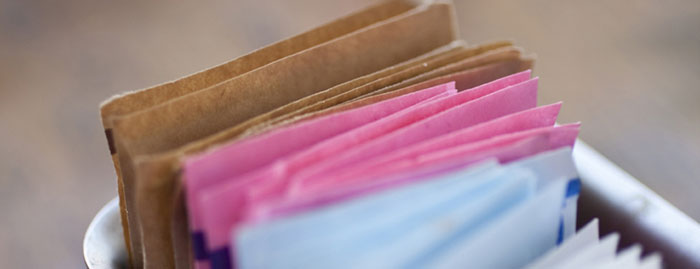
Today we will talk about sugar substitutes. Also known as calorie-free or calorie-free sweeteners. Low-calorie sweeteners Sucralose. It is 600 times sweeter than sugar, it is marketed under various brands, Splenda, Candys, Sucralin…, it is thermostable and resists pH variations, so it is ideal for cooking. Saccharin. It is 300 times sweeter than sugar. It is marketed under the name Sweet’n Low, and its consumption should not be more than four sachets as it can lead to stomach problems. Aspartame. It is between 180 and 220 times sweeter than sugar and is used in food products and beverages. It is considered low in calories because a very low dose must be used to sweeten foods, although it provides some energy. Why is it not advisable to use aspartame in cooking? Aspartame is made up of one molecule of aspartic acid and another of phenylalanine. With heat, the two amino acids dissociate and their two flavors replace the sweet taste of aspartame. There is no problem in the case of aspartic acid, as it is tasteless. But phenylalanine is not bitter. In this way, we should not use aspartame for preparations that have to be heated as it becomes bitter. On the other hand, people with phenylketonuria cannot consume this sweetener, due to the presence of Phenylalanine in it. Sodium Cyclamate. It is 30 times sweeter than sugar and can be used for cooking at high temperatures. Acesulfame Potassium: It is approximately 20 times sweeter than sugar, and with great stability to technological treatments, temperature and storage. Biologically, acesulfame K is not metabolized in the body, and is excreted It creates quickly without chemical changes, so it does not accumulate. Stevia: They are herbs and shrubs of the species “Stevia Rebaudiana”, used as a sweetener and as a medicinal plant. Its leaves sweeten between 30 and 45 times more than sucrose and can be consumed fresh, in infusion and as an ingredient in foods. The leaves have a fainter flavor at first, but last longer than regular sugar. The benefits are that in addition to being natural, its consumption has a negligible effect on blood glucose and thus prevents obesity and HTN. Caloric sweeteners: Processed. Highlights include confectioner’s sugar, corn syrups, dextrose (glucose combined with water), invert sugar (used in candy) and sucrose. Not processed. Sorbitol, xylitol and maltitol polyols, with 1.6 and 2 calories per gram and are used in many diet products and in sugar-free gum and candies. The most used polyols are: sorbitol, mannitol, isomaltol, maltitol, maltitol syrup and xylitol. These sweet-tasting additives contain fewer calories than sugar and do not cause cavities. Although they can increase blood glucose. But you have to be careful with the laxative effect of any of them if consumed in excess. Also in this group are unrefined or brown sugar, fructose, glucose, honey, lactose, maltose and molasses (from fermentation of cereals).