Back to blog
Blog Copy Cwp
How to read labels
Nowadays there are too many foods in the supermarket so there is no choice but to learn to read food labels.
Buying food is a task that today involves paying a lot of attention and care when choosing what we are going to eat. There are so many options, so many processed foods, that we must increasingly be better informed about what we put on our plate. And for that, there is no choice but to learn to read food labels. That is why with just 3 steps, you can find out which foods are the most nutritious for you. Tips for reading labels
- Don’t be fooled by 0% products: This generally refers to fat, but it can also be foods with sweeteners. Don’t fall into this trap, because many times 0% foods may not contain fat, but they do contain a high amount of sugar.
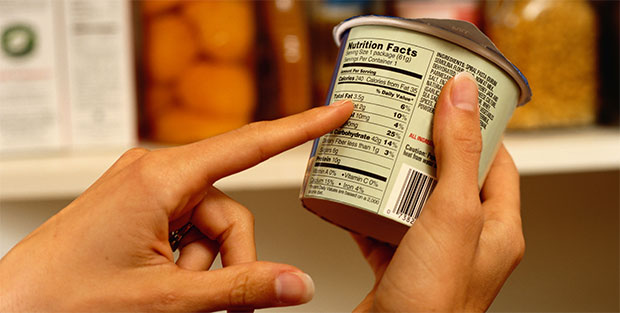
- Nutritional Information: In this section, everything is indicated per 100 g of product and sometimes, but not always, per serving. You must be careful in this, because most of the time the portion is more than 100g of product. Here you can first find the energy it gives you in kilocalories. And also the content of macronutrients: proteins and fats, carbohydrates. We also find the % of the RDA (recommended daily allowance) of each macronutrient, which is the minimum amount of a nutrient that we should consume. The most important thing to keep in mind from this information is to choose foods with a lower percentage of fats and sugars, and with higher fiber when possible.
- Fewer additives: These are ingredients that are generally added to preserve processed food. In any case, it is best not to abuse processed foods with huge lists of additives. Try to choose a balanced diet that contains a good amount of fresh foods. scos. With this information, the next time you go to the supermarket, take a few minutes, read, educate yourself, and make healthier food choices.