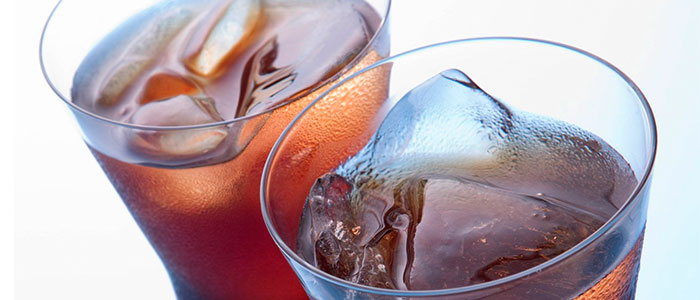
Drinking light soda makes you eat more, studies dictate
It seems reasonable to recommend that all people, and especially those who are overweight or obese, not consume light drinks.
The study is not definitive, it does not confirm that there is a cause-effect relationship nor does it go into the reasons for this possible relationship. Furthermore, it has detractors. The problem for the manufacturers of this type of drink is that it fits perfectly into previous ones, even made with rodents. For all these reasons, it seems reasonable to recommend that all people, and especially those who are overweight or obese, not consume light drinks. You have to admit that the idea was good. Offer drinks that taste similar to sugary soft drinks, but with few or no calories, thanks to certain artificial sweeteners. Those calories that we save would make us lose weight little by little. But, like many other issues regarding weight loss and diets, things have turned out to be more complicated than previously thought. And it seems that the idea does not work. Studies The study that we bring to this section today, carried out by researchers at Johns Hopkins University, in Maryland, United States, was led by Sara Bleich and published in the “American Journal of Public Health”. Its purpose was to study the influence that the consumption of light drinks can have on weight loss. And, indeed, they found a significant relationship. But not what the manufacturers of these drinks intend, but rather the opposite. In fact, after studying data from a large survey carried out over ten years among 24,000 residents in the United States, they found that overweight or obese people ate the same amount of calories regardless of the drinks they usually drank. However, the exception was those who drank light drinks. Those who opted for this types of drinks ate more than those who chose sugary soft drinks. And that despite the calorie savings that light ones represent. Specifically, overweight people ate, on average, 91 kilocalories more per day. Those who suffered from obesity, 161 more. In the opinion of the researchers, these are significant figures. Some experts clarify, probably rightly, that the research does not show that this increase in calories is due to drinking light drinks. However, suspicions in this regard do not arise from this study alone. Other previous research, together with the one we are commenting on today, already pointed in the same direction. Psychological reasons According to certain experts, eating more when drinking light drinks may be due to psychological reasons. Whoever drinks them reasons, more or less consciously: “since I save calories in the drink, I can drink a little more of this other thing.” And that little bit more can turn into a lot more, even exceeding the calories saved in the drink. Without ruling out this possibility, and perhaps adding new reasons to it, other studies seem to confirm that the body is “misled” by a sugar that turns out not to be. This causes certain metabolic imbalances that result in a greater desire to eat. This has been the case with experiments carried out with rodents. Those mice that had drank light drinks ate more than those that had drank sugary drinks. For them, logically, the aforementioned psychological reasons would have to be ruled out. Conclusion In any case, and although the studies have not yet unraveled the ultimate mechanisms involved or reached perfectly demonstrable conclusions, for the moment the advice given above seems prudent. Taking into account the accumulation of studies in this regard, it is advisable not to drink artificially sweetened beverages using calorie-free products. And, as it is also true that sugar is not advisable either (calories, diabetes…), it is best to simply drink water.