
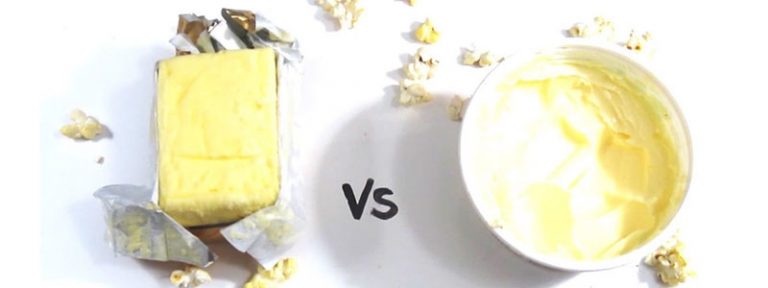
Butter vs margarine
In this article we discuss the famous debate between butter vs margarine so that you can make the best decisions in your diet.
Butter is produced from cow’s milk. Therefore, all the fat it has is of animal origin. Margarines are made with vegetable oils and fats. Butter has a higher saturated fat and calorie content and, due to its animal origin, provides cholesterol. Which is natural and which is synthetic? Both products require human transformation to be produced. Margarines are made from vegetable oils and butter from dairy fat. Many of the foods that are part of our daily diet have gone through a transformation process. For example yogurt, since to get it you have to process the milk. It seems that when the food of origin is closer to us and we perceive it as natural. This sensation is extrapolated to derived foods, such as butter from milk. It also comes into play that they are products that have traditionally been seen being made in homes. Like the aforementioned yogurts and butter or cheese. But in the case of margarine, you have to know that it is made with vegetable oils and that the final food contains the benefits of these, but that the oils must be processed to become spreadable. Which is healthier? All foods have a place in a varied and balanced diet. The fundamental thing is the variation and moderation with which each food is taken and that there is an abundance of foods of plant origin such as fruits, vegetables, legumes, whole grains, etc. There are multiple studies that indicate that the consumption of saturated fats increases blood cholesterol and that the consumption of unsaturated fats to replace saturated fats reduces this cholesterol. By replacing butter consumption with margarine, you help control cholesterol. Since you significantly reduce the intake of saturated fats in favor of unsaturated fats. Margarine provides on average 70% less saturated fat and 60% more unsaturated fat than butter. Margarine and margarine ¾ These are names given to the product with the aim of complying with the Regulation of spreadable fats CE 2991/94 (DOCE 9.12.94). Depending on the amount of fat, margarines legally receive a different name: MARGARINE: fat content between 80% and 90% MARGARINE ¾: fat content between 60% and 62%. LIGHT MARGARINE: fat content between 39% and 41% The legal name of margarines that are outside these ranges is: “Spreadable fat x% MG”.